

“I don’t have experience.”
“I don’t have the right connections.”
“Nobody is giving me a chance.”
If you’ve ever thought any of these things, you’re not alone.
Many students and freshers want to start their careers but feel stuck because every opportunity seems to require something they haven’t had a chance to build yet.
Jobs require experience. Experience requires opportunities. And opportunities seem to go to people who already have experience.
So, how do you break this cycle?
You stop waiting for the perfect opportunity and start creating reasons for someone to notice your potential.
Here are seven practical ways to get started.
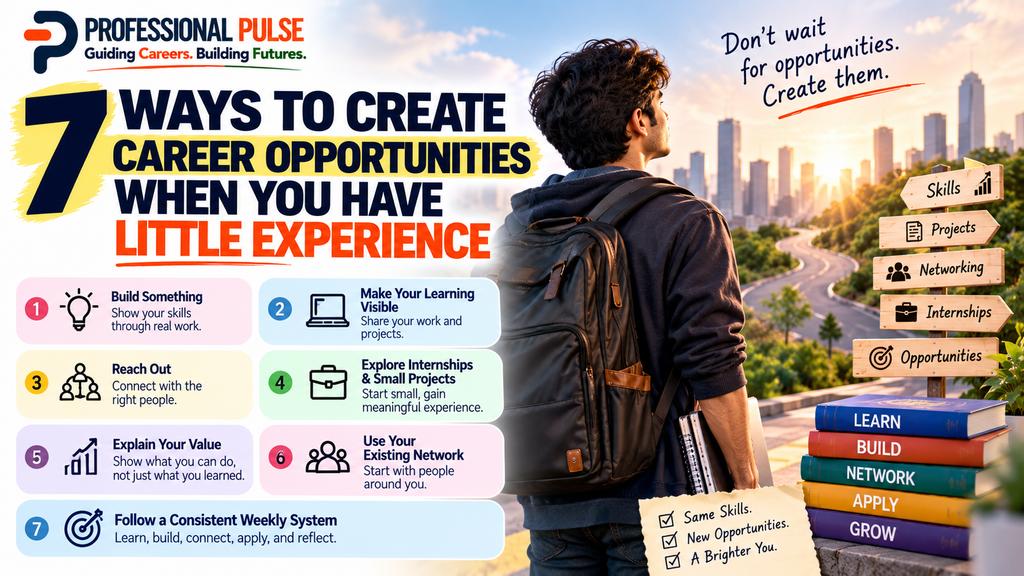
1. Build Something Before Someone Asks You To
You don’t always need a job to demonstrate your skills.
If you’re interested in digital marketing, create a sample campaign for a local business.
If you want to work in HR, prepare a sample job description, candidate screening form, or recruitment tracker.
If you’re learning data analytics, analyze a publicly available dataset and present your findings.
If you’re interested in graphic design, build a small portfolio of original designs.
These projects may not replace professional experience, but they give people something concrete to evaluate.
Don’t just tell people what you can do. Give them something that demonstrates it.
2. Turn What You’re Learning Into Visible Work
Learning a skill is important. Showing how you’re applying it can make that learning more useful.
For example, if you’re learning Excel, share a small dashboard you created.
If you’re studying marketing, explain a campaign you analyzed.
If you’re learning communication, publish a thoughtful article or presentation on a topic you understand.
You can use LinkedIn, a portfolio, or another relevant platform to showcase your work.
You don’t need thousands of followers.
You need a few examples that demonstrate your thinking, effort, and ability.
3. Reach Out to People With a Clear Purpose
Many freshers send messages like:
“Hello, sir. Please give me a job.”
It’s understandable to want help, but the other person may not know anything about your skills or interests.
Instead, make your outreach specific.
For example:
“Hi, I’m a recent graduate interested in recruitment. I’ve been learning candidate sourcing and have created a sample recruitment tracker. I’d appreciate your advice on which skills I should develop to become job-ready.”
This message gives the recipient context and a clear way to respond.
Start with alumni, professionals in your target industry, founders, recruiters, and people whose work genuinely interests you.
Networking isn’t just asking people for opportunities. It’s starting professional relationships.
4. Apply for Internships and Small Projects, Not Just Full-Time Jobs
Your first opportunity doesn’t have to be a permanent job.
Depending on your circumstances, consider:
- Internships
- Short-term projects
- Volunteering for a relevant organization
- Freelance assignments
- College projects with real-world applications
- Entry-level roles with structured learning
Evaluate each opportunity carefully.
Look for meaningful work, clear expectations, learning, appropriate compensation where applicable, and people who can help you develop.
Be cautious of roles that demand substantial unpaid work without clear learning outcomes or use the promise of future employment to justify unreasonable demands.
Choose opportunities that help you build evidence of what you can do—not merely something to add to your resume.
5. Learn to Explain Your Value
Imagine two candidates applying for an entry-level marketing role.
Candidate A says:
“I have completed a digital marketing course.”
Candidate B says:
“I’ve completed a digital marketing course, created a sample campaign, researched the target audience, and developed a content calendar. Here’s my work.”
Both may be beginners.
But Candidate B gives the employer more information about their initiative and practical understanding.
When presenting yourself, explain:
- What you learned
- What you created
- What problem you tried to solve
- What tools you used
- What you would improve next time
Be honest about what was a practice project and what was real client or workplace experience.
You don’t need to pretend to be an expert.
You need to show that you’re willing to learn and capable of taking action.
6. Use Your Existing Environment
You may not have access to a large professional network yet.
That’s okay.
Start with the people and resources already around you.
Talk to seniors at college. Connect with alumni. Participate in relevant online communities. Attend webinars. Join professional groups. Ask teachers and mentors for feedback.
You can also identify small businesses, community organizations, or student initiatives where your skills might be useful.
You don’t have to travel to a major city or know influential people to take your first step.
Your starting point may be limited. Your willingness to learn and create doesn’t have to be.
7. Follow a Consistent Weekly System
Career progress becomes difficult when your entire strategy is to check job portals and hope for a response.
Instead, create a small weekly system.
For example:
- Learn: Spend time improving one relevant skill.
- Build: Create or improve one portfolio project.
- Connect: Reach out to three relevant professionals.
- Apply: Submit a few carefully selected applications.
- Reflect: Review what worked and what you need to improve.
Adjust these numbers to fit your schedule and responsibilities.
You don’t need to do everything in a single day.
You need to keep taking meaningful steps.
Over time, this approach can help you improve your skills, strengthen your portfolio, expand your network, and become better prepared when opportunities appear.
Your 7-Day Opportunity-Creation Plan
If you’re unsure where to start, try this:
Day 1: Choose one career direction to explore.
Day 2: Identify one skill employers commonly expect in that field.
Day 3: Start a small project that demonstrates that skill.
Day 4: Improve the project and document what you learned.
Day 5: Update your LinkedIn profile or portfolio to showcase your work.
Day 6: Connect with two or three relevant professionals and start genuine conversations.
Day 7: Identify internships, projects, or entry-level opportunities where you can apply what you’ve learned.
At the end of the week, you may not have a job offer.
That’s not the only measure of progress.
You’ll have taken concrete steps toward becoming a stronger candidate.
One Important Reminder
Not every effort will lead to an opportunity.
Some people won’t respond. Some applications will be rejected. Some projects won’t work as expected.
That doesn’t mean you should stop trying.
Use the feedback available to you. Improve your approach. Keep building relevant skills. And recognize that external factors also influence hiring decisions.
You cannot control every opportunity.
But you can improve how prepared you are when one appears.
The Question to Ask Yourself
Instead of asking:
“Why isn’t anyone giving me a chance?”
Try asking:
“What can I build, learn, or demonstrate this month that makes me a stronger candidate?”
Start there.
One project. One new skill. One meaningful conversation. One application.
You don’t need to have everything figured out before you begin.
You can start with what you have, build on what you learn, and create more possibilities for your future.
Professional Pulse
Learn. Connect. Grow. Become Career-Ready.
Follow Professional Pulse for practical career guidance, skill-building resources, internships, workshops, and opportunities for students and young professionals.
Join our WhatsApp Community to stay connected with career resources and relevant opportunities.